
Michael Oliver
Michael Oliver was an English sociologist, author, and disability rights activist. He was the first Professor of Disability Studies in the world, and key advocate of the social model of disability.
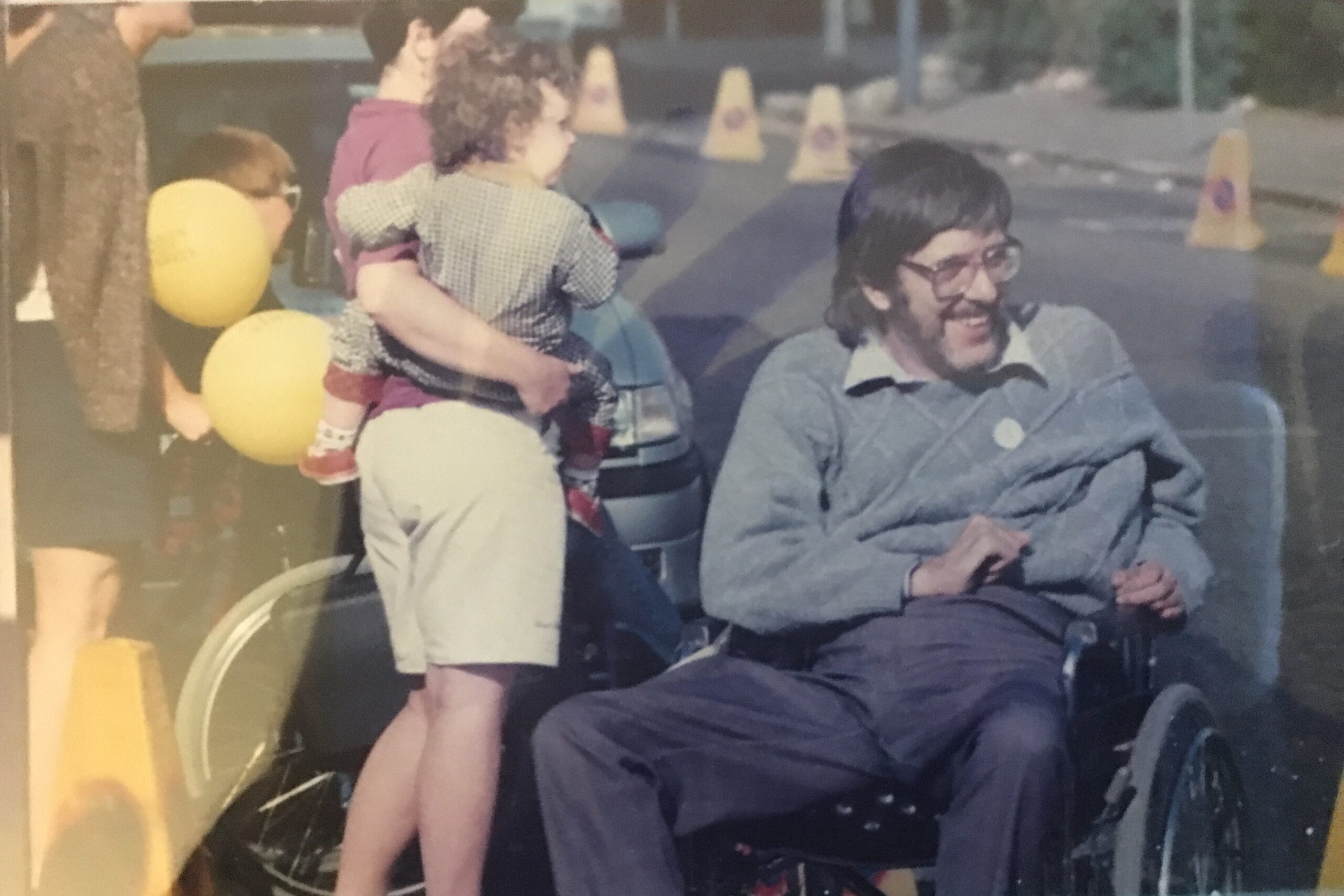
Michael Oliver was born 3 February 1945, in Rochester, Kent. to Fred and Edna (nee Hoiles) Oliver. He broke his neck in 1962 while on holiday, and was treated at Stoke Mandeville Hospital. He used a wheelchair after his accident.
He returned home after a year of rehabilitation. He worked in adult education at Borstal Prison (now HM Prison Rochester) and then took a degree in sociology. He started his degree at the University of Reading in 1971, but the support arrangements were inadequate, and he left after a few weeks. He completed his bachelor’s degree at the University of Kent, followed by a master’s, and a doctorate completed in 1978.
From 1979, Oliver ran a course on Social Work with Disabled People at the University of Kent.
In 1983, he published his first book, Social Work with Disabled People. Oliver later published The Politics of Disablement (1990), Social Work: Disabled People and Disabling Environments (1991) and Understanding Disability (1996).
Oliver became a key advocate of the social model of disability. This is the idea that much of the inconvenience and difficulty of living with a disability is not an inherent feature of the disability itself, but a failure of society to adapt to the needs of disabled people. While the distinction between “impairment” and “disability” had been made by the Union of the Physically Impaired Against Segregation (UPIAS) Oliver coined the term “social model” to describe this distinction, and popularized it. At the time he retired, Oliver was Emeritus Professor of Disability Studies at the University of Greenwich.
Oliver proved a formidable advocate of the social model and civil rights for disabled people, but was disappointed in the 1992 Disability Discrimination Act, feeling that it fatally split the disability movement. He was a fierce critic of the big disability charities, claiming that “disability corporatism” had replaced activism since the 90s. He took part in Block Telethon in 1992.
Activist
Legends