When we built NDACA, I found many of the heritage stories NDMAC went on to tell - in boxes and attics of elder activists.
During the years of me being NDACA project & creative director in both the Heritage Funding & Arts Council England Development and Delivery Phases, myself and the NDACA (National Disability Arts Collection and Archive) digitising and archive team travelled around collecting and digitising great disabled artists and their arts, such as the works of Tanya Raabe Webber, the journey of which the BBC profiled.
It was during these on-the-road van-and-scan travels for NDACA that I noticed some disabled people had boxes of ephemera and left-over stuff not of the Disability Arts Movement (i.e. the NDACA remit) but of their time in Disability Movement and Rights Activism: banners, photographs of comrades, stickers and flags, parliamentary lobby plans and much more.
It was seeing this when I had a Eureka moment – why don’t we make the next large Shape Heritage Project the companion archive to this NDACA Disability Arts one, the next ambitious crip-led project being a Disability Rights heritage story? I had been active in both the Arts and Rights movement so know what I was seeing, but it was Liam Hevey who came up with the project moniker – NDMAC: the National Disability Movement Archive And Collection, and Alex Cowan who framed how and what we would seek to collect.
We knew there were and had been other disability movement stories told – but this we thought would be the first personal, character-led archive telling this superb crips-fights-for-civil-rights heritage story. Some years later, after much research, hard work, we achieved both the Development Phase and Delivery Phase funding from the National Lottery Heritage Fund and others.
Collecting the Keith Armstrong archive – long days and evenings going through his photographic folders - and realising the fantastic history in those old film negatives.
No longer with us, activist Keith Armstrong (1950-2017) was a legendary member of both the rights and arts disability movements, as well as being in over 50 different socialist/activist organisations in his lifetime. When Keith died, NDACA archivist Alex Cowan was invited to take some of Keith’s effects away, which he did. Those boxes were stored in NDMAC and I began the journey of searching through them, in particular the photographic negative albums. We knew Keith had been a photographer but, at first, many black and white negatives I found in the boxes and folders were of flowers, holidays abroad, with some colour pictures of Keith having dinner with friends and so on….when after days of going through hundreds of his photographic files negative-by-negative, I hit another Eureka moment, as I came across several rolls of b/w and colour films that showed Keith had uniquely photographed many of the key moments in the disability movement and rights struggles, such as the legendary Block Telethons of the early 1990s, and often shot wonky-camera at wheelchair-height, too, so very much street-photography, but of hugely important moments in the fights for rights. There they were: shots of Campaign for Accessible Transport, shots of the Mass Bus Protest on Westminster Bridge, shots of the Direct Action Network stopping buses, shots of the Mass Crawl to Parliament, and much more. What a find!
The unique Keith Armstrong street-protest photography collection uncovered. Is that Keith with camera in hand?
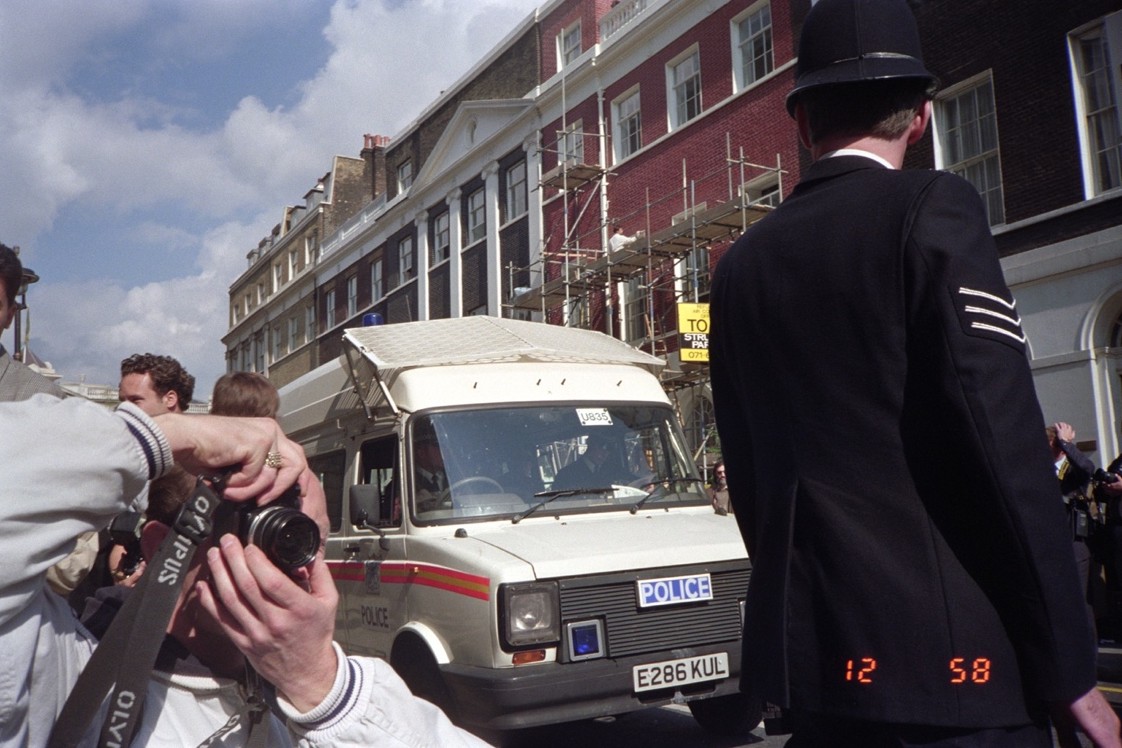
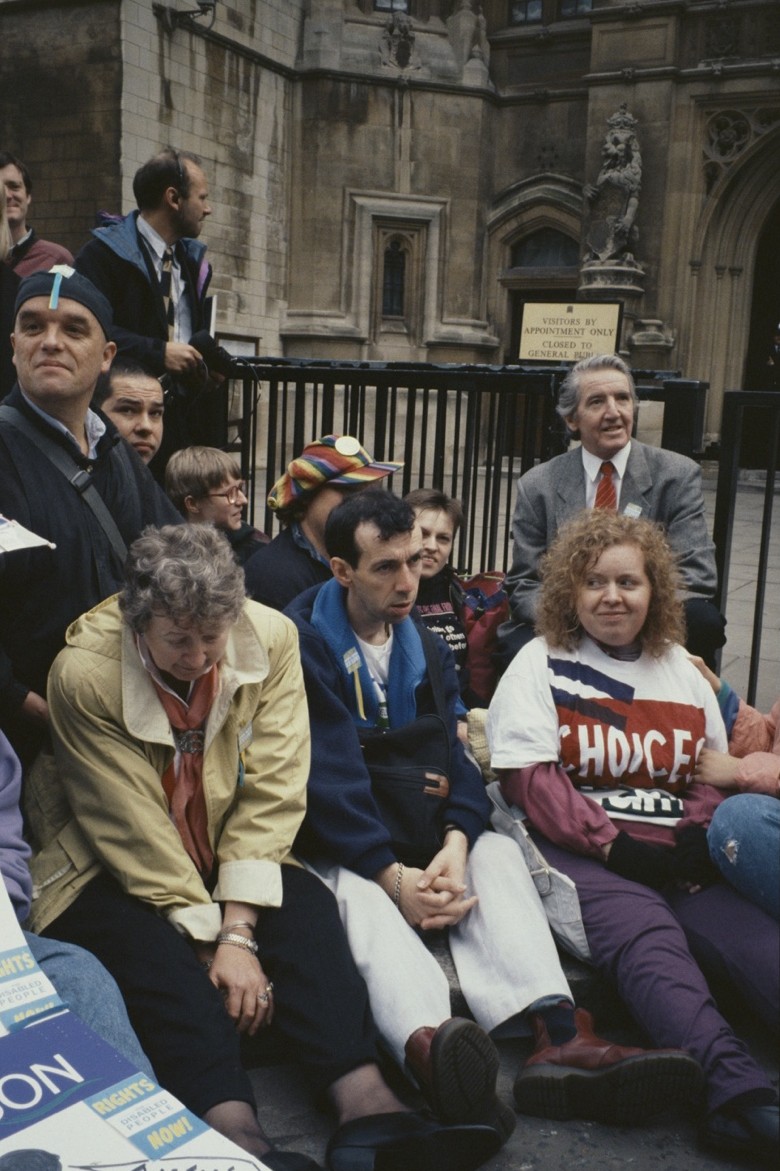
Showing fantastic crip fights for civil rights, such as the historical pre-Rights ‘Crawl To Parliament’ in the 1990s above
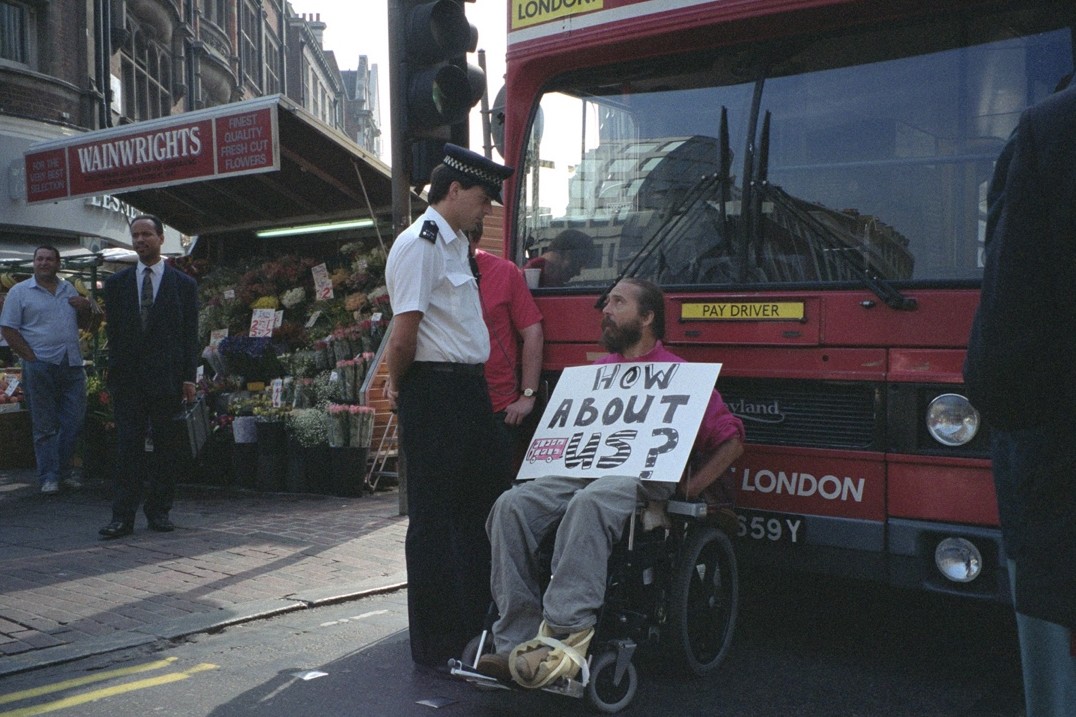
As well as being on and photographing the legendary bus-access demos in Central London, Keith was on every kind of demo – these images shows the wider Civil Rights for Disabled People and Keith took his unique POV camera along, often shooting at wheelchair-height.
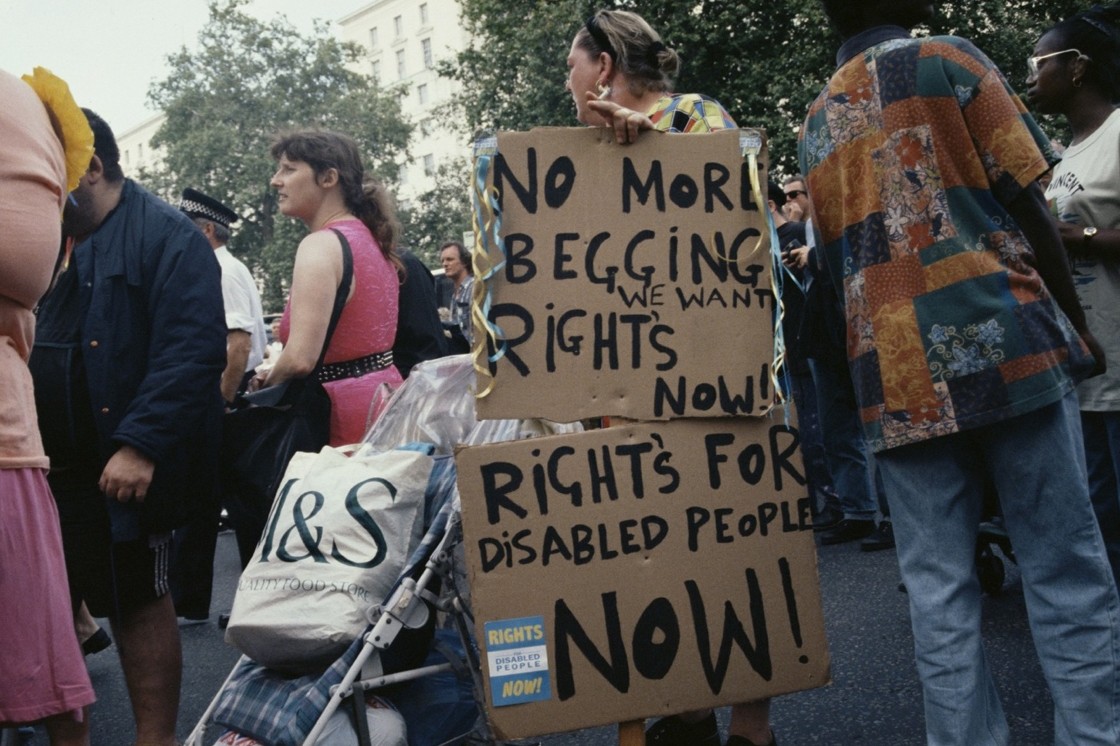
We went large in homage to Keith’s images in DAM In Venice.
It was finding this activist-archive of Keith’s with at least 500 images of key disability movement protests – accessible-bus campaigns, parliamentary crawls and so on - including showing many of those disabled activists who would go onto become major leaders such as Baroness Jane Campbell, that persuaded us to go large with this collection, particularly as a major part of the CRIP ARTE SPAZIO: THE DAM IN VENICE 2024/25 exhibition, which I had pitched to ACE and was curating and creatively directing for Shape, which went onto be called ‘One of the Top 50 Exhibitions In The World 2024’ . The exhibition played for over a year in Venice and the UK, and hit over 2M online, with Keith’s imagery a large part of the media and audiences take up such as on reviews, visitors socials and more. For a key outline of this and how we Went Large with Keith Images, see Nina Shen of CT20’s blog – How I Designed The DAM In Venice.
As Nina puts in her CT20 blog, ‘One key challenge of presenting the artworks was the lack of a key signifier to the DAM. Until one day, the curator David brought in a box containing hundreds if not thousands of film negatives, sweat-stained original protest tees from the 1990s, begging/protest boards and a dramatic funeral shroud full of protest badges belonging to the deceased activist, Keith Armstrong. I thought ‘That’s it!’ and this became a major turning and uniting element, allowing the art works to be free because his protest imagery provided the backdrop to the show, and his archive gave us the right anchor and understanding to the DAM.’
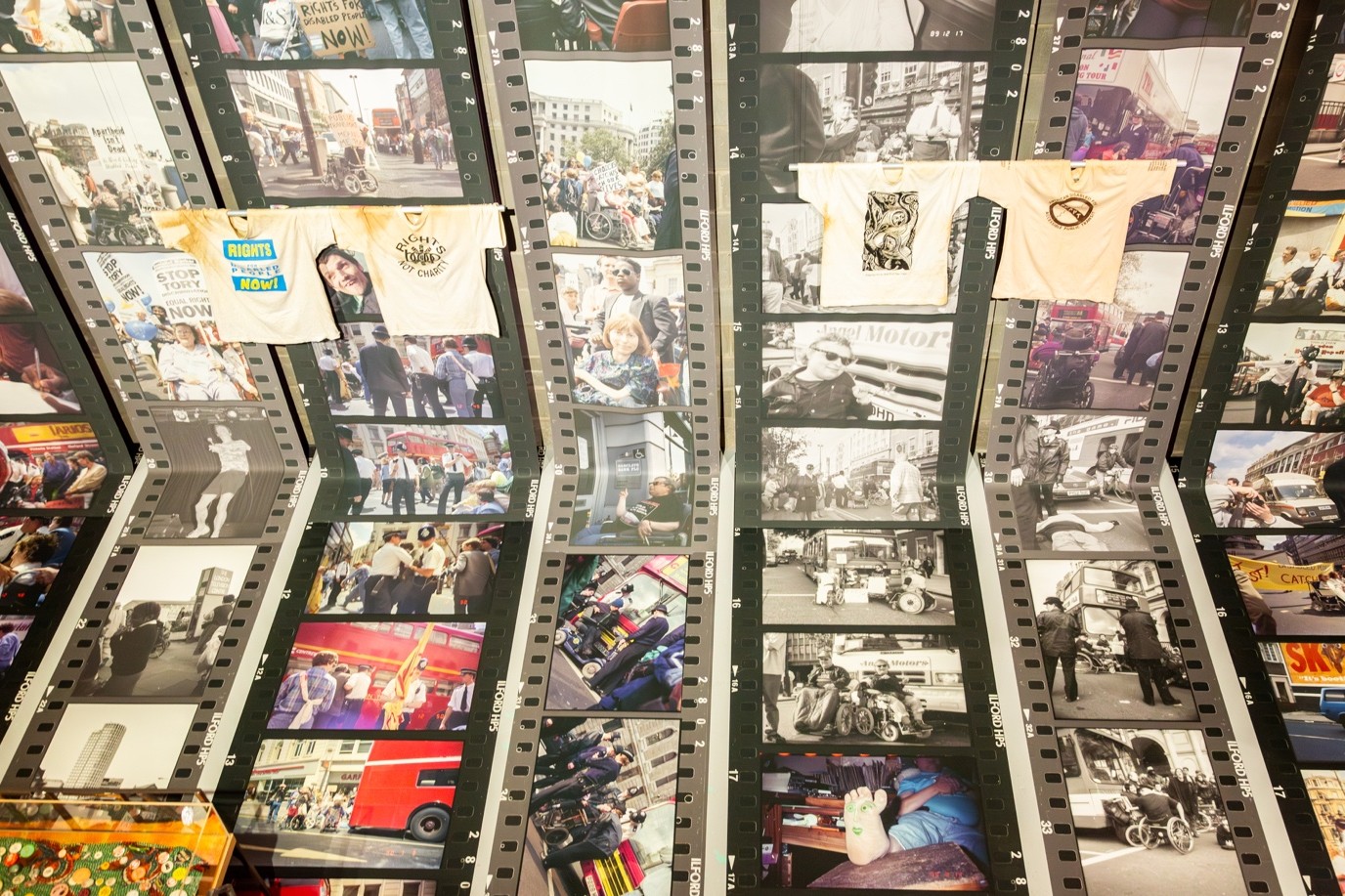
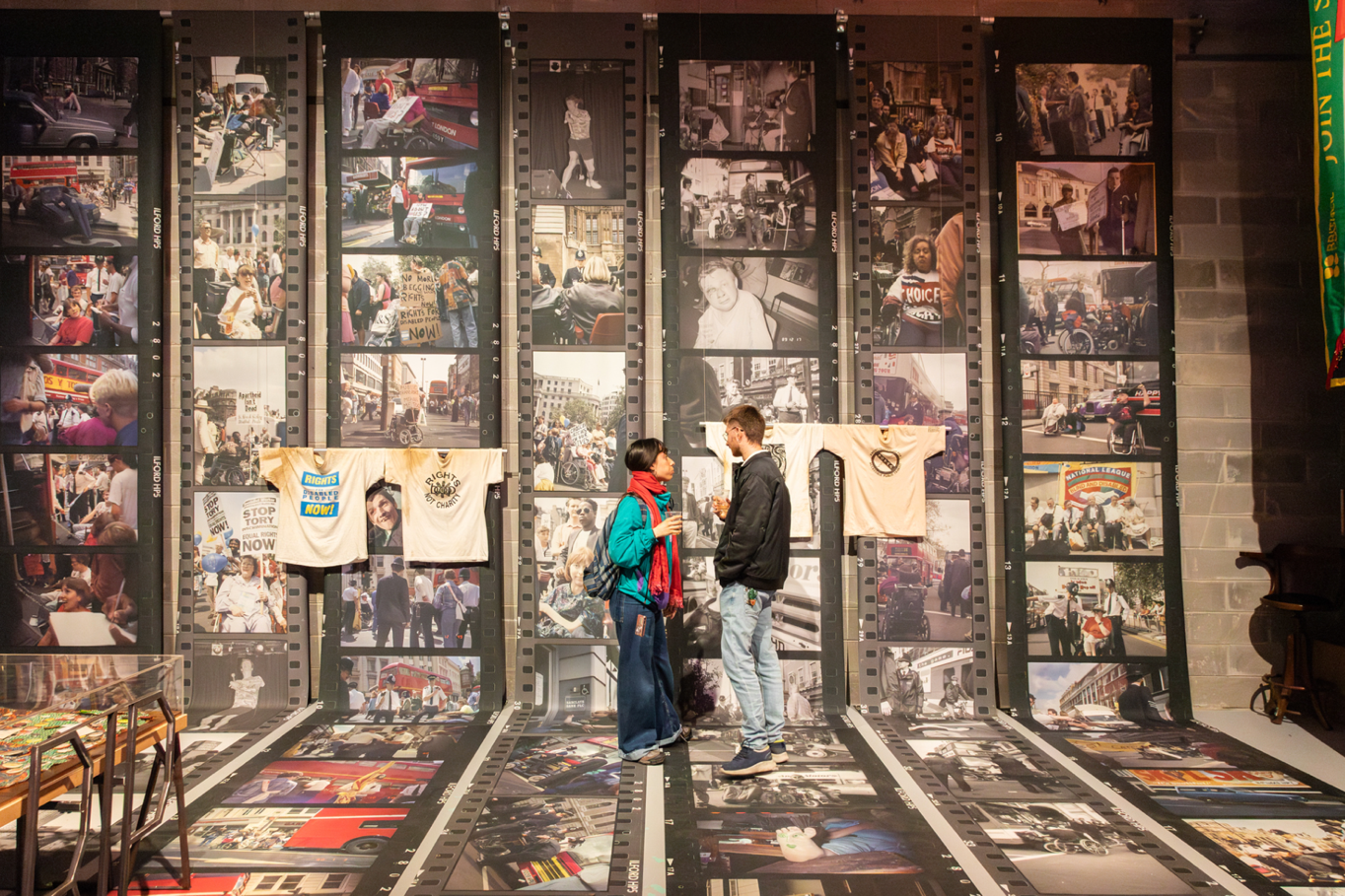
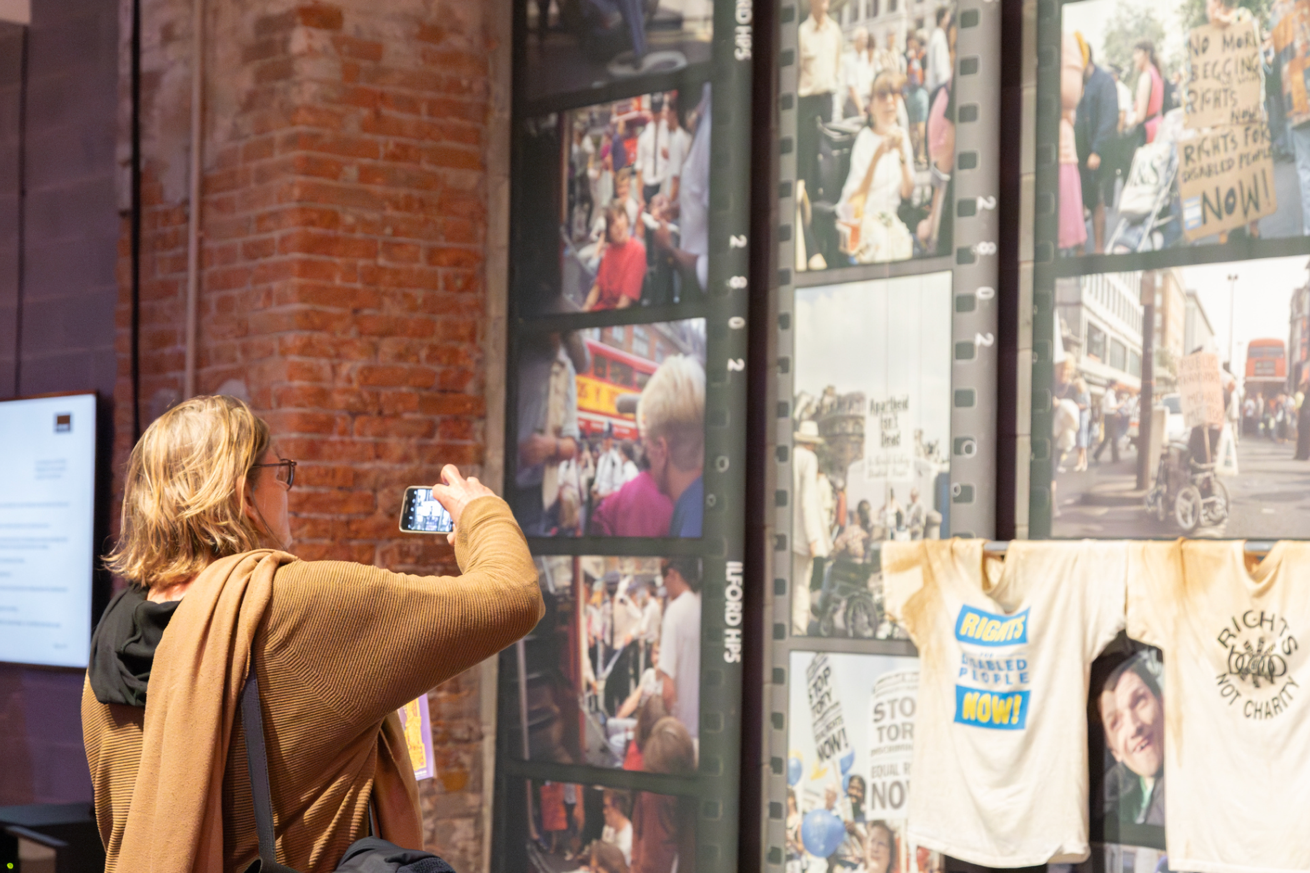
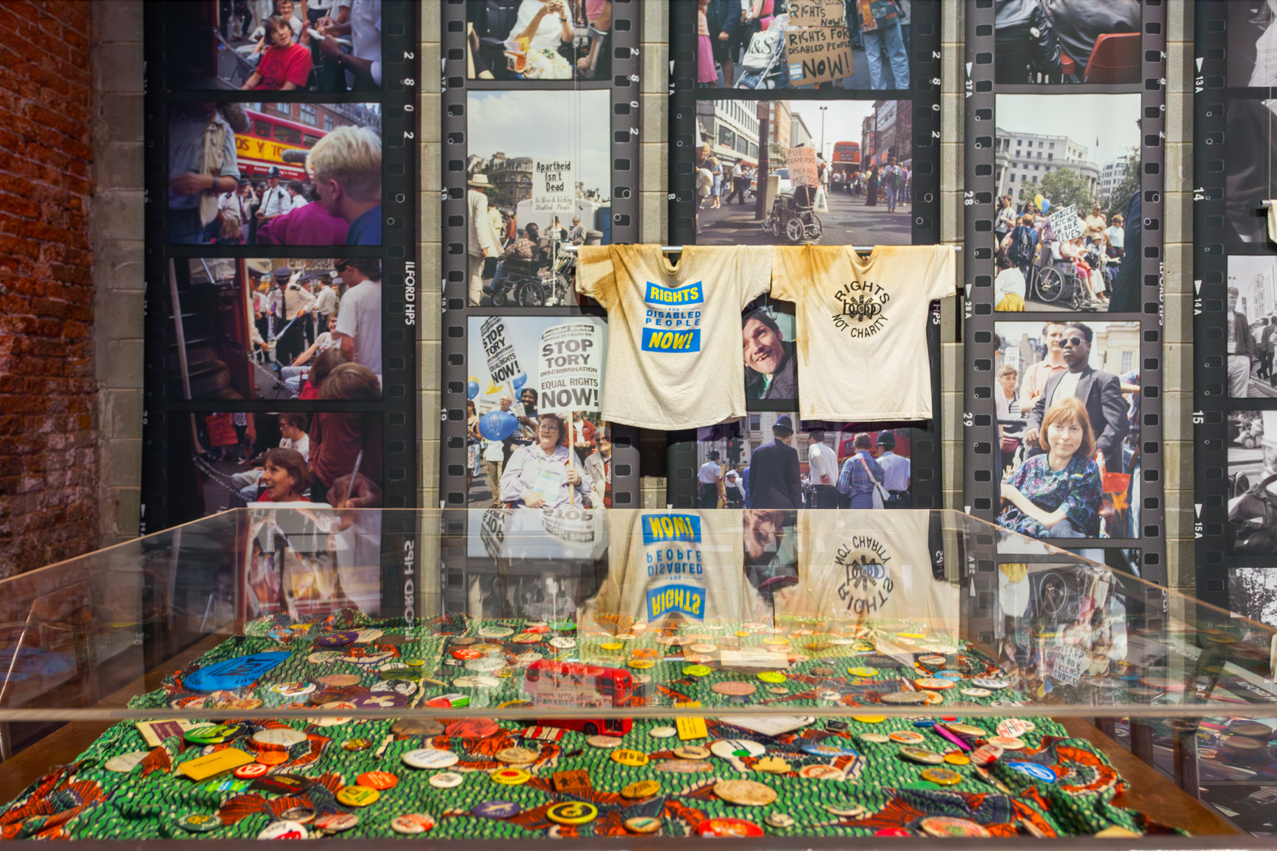
And we honoured Keith Armstrong’s activist-memory by encasing his funeral shroud in a bespoke gold box and RIP letters at the legs for public display in Venice and the UK.
Very much in the style of honouring a fallen comrade, we devised a way of preserving and showing Keith’s funeral shroud – a magnificent cloth holding all of his protest badges, which bore witness to the huge activism across so many issues that Keith embraced in his life, and which was at Keith’s funeral. Not enough of those who went before and helped built a better society, or tried to, are honoured and so we chose to honour Keith this way by showing and preserving this magnificent shroud.
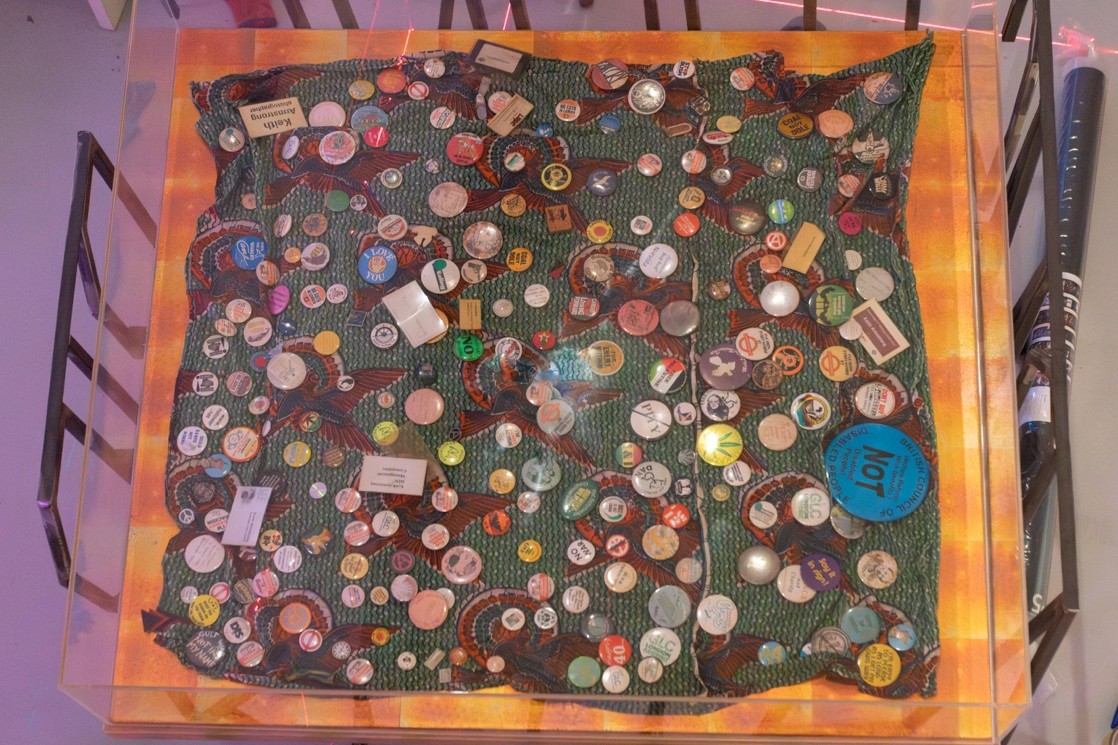
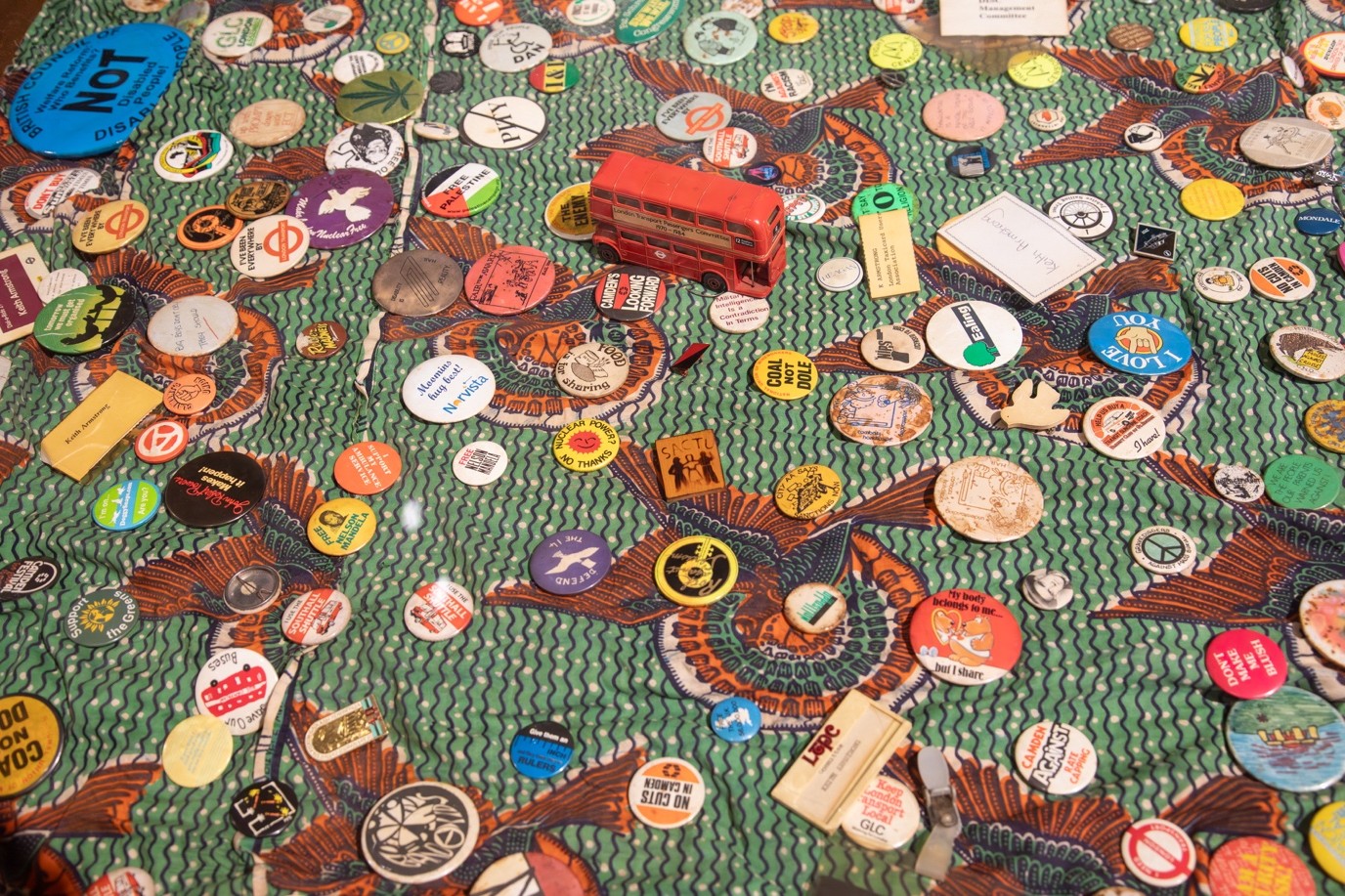
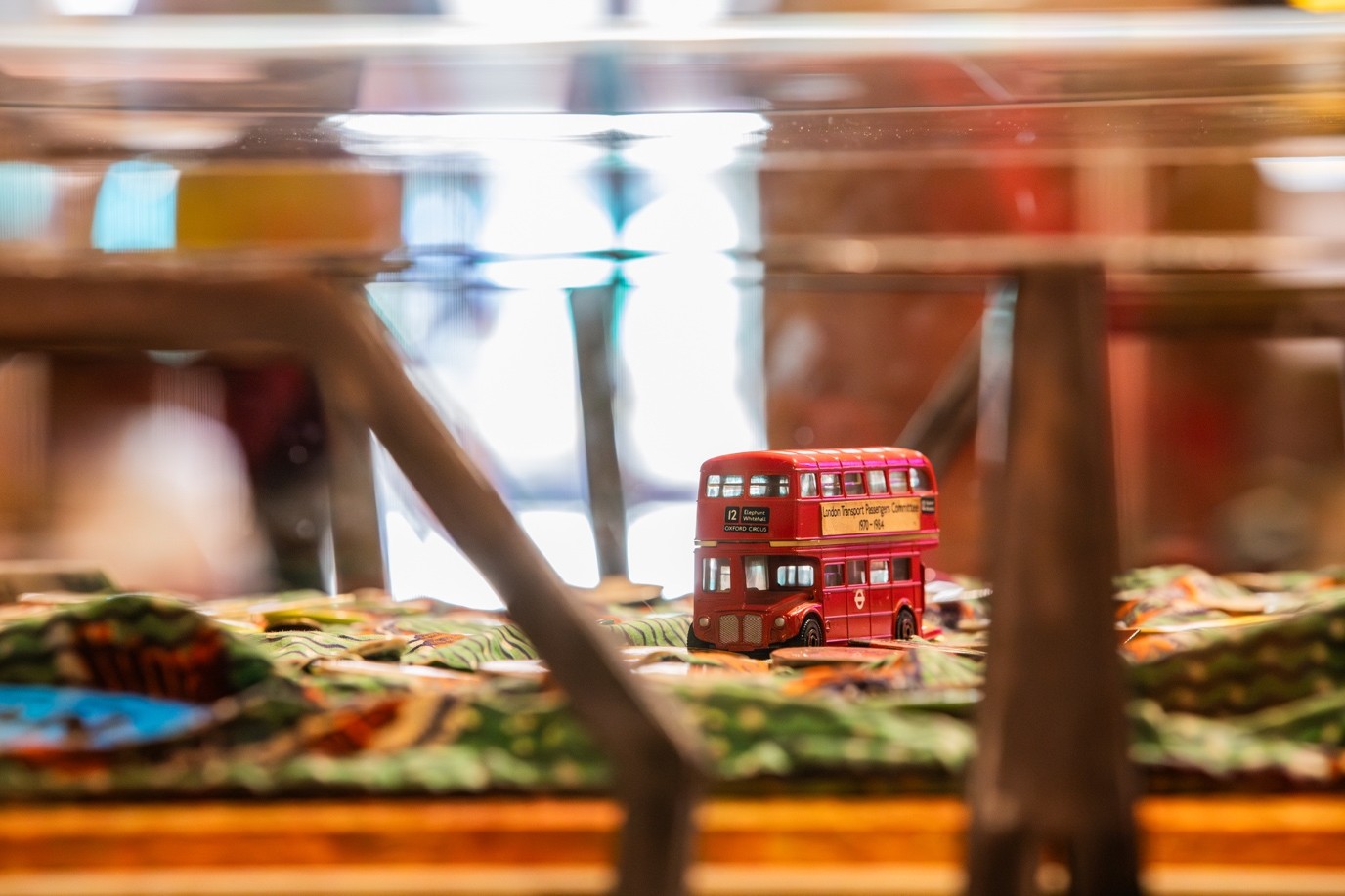
The gold box now tours with NDMAC and resides at the NDMAC archive at Buckinghamshire New University. Also see the Shape freelancer Emily Roderick‘s blog on the NDMAC website exploring Emily’s responses to Keith Armstrong showing in Venice in Crip Arte Spazio: The DAM In Venice.
The other incredible collections now held in NDMAC – John Kelly, Agnes & Adam Fletcher, Simone Aspis and many more
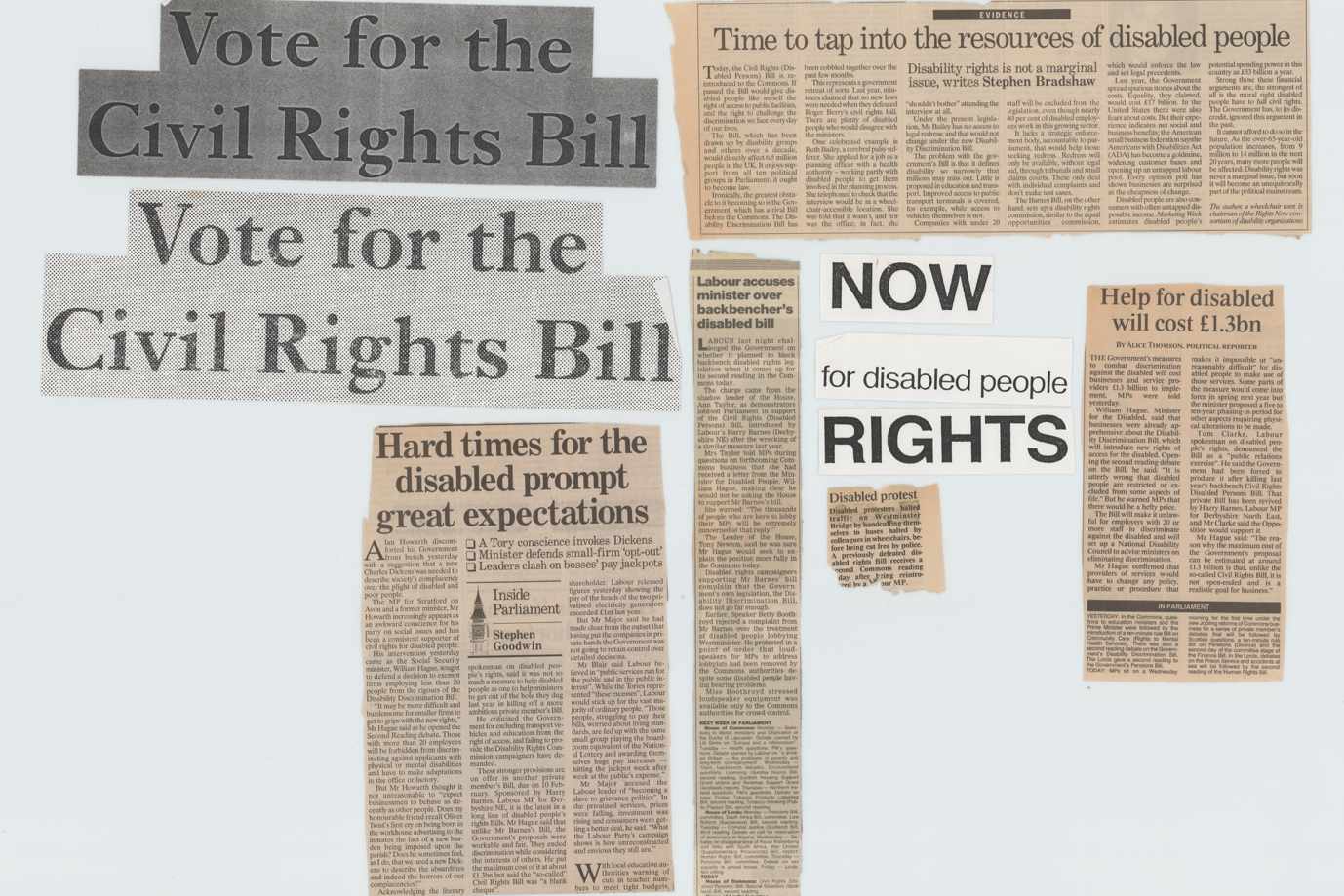
Many activists have pledged their political movement ephemera to us, including John Kelly who was an important foot-soldier, to use his phrase, in the lobbying and driving a rights bill through Parliament. Agnes & Adam Fletcher, too, were important in rallying disparate groups across the Rights Now spectrum into a focused campaign to change the law and bring in a civil rights bill which had teeth and delivered real societal change for disabled people. And Simone Aspis was arguably the leading learning-disabled activist in these Parliamentary-road campaigns, too, as she secured a Parliamentary Pass and lobbied successfully for Easy Read (as it is now known) versions of the different Rights Bills.
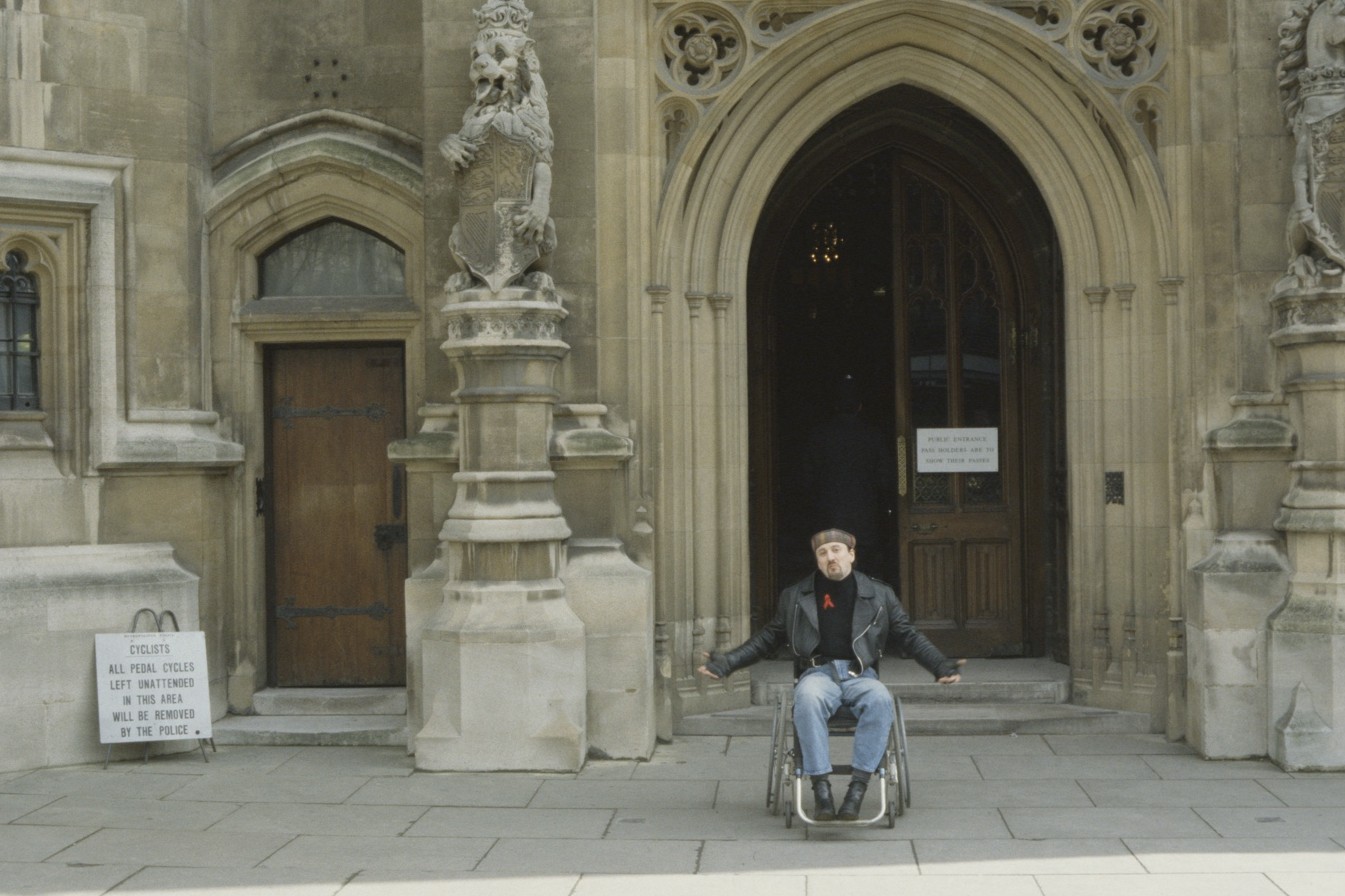
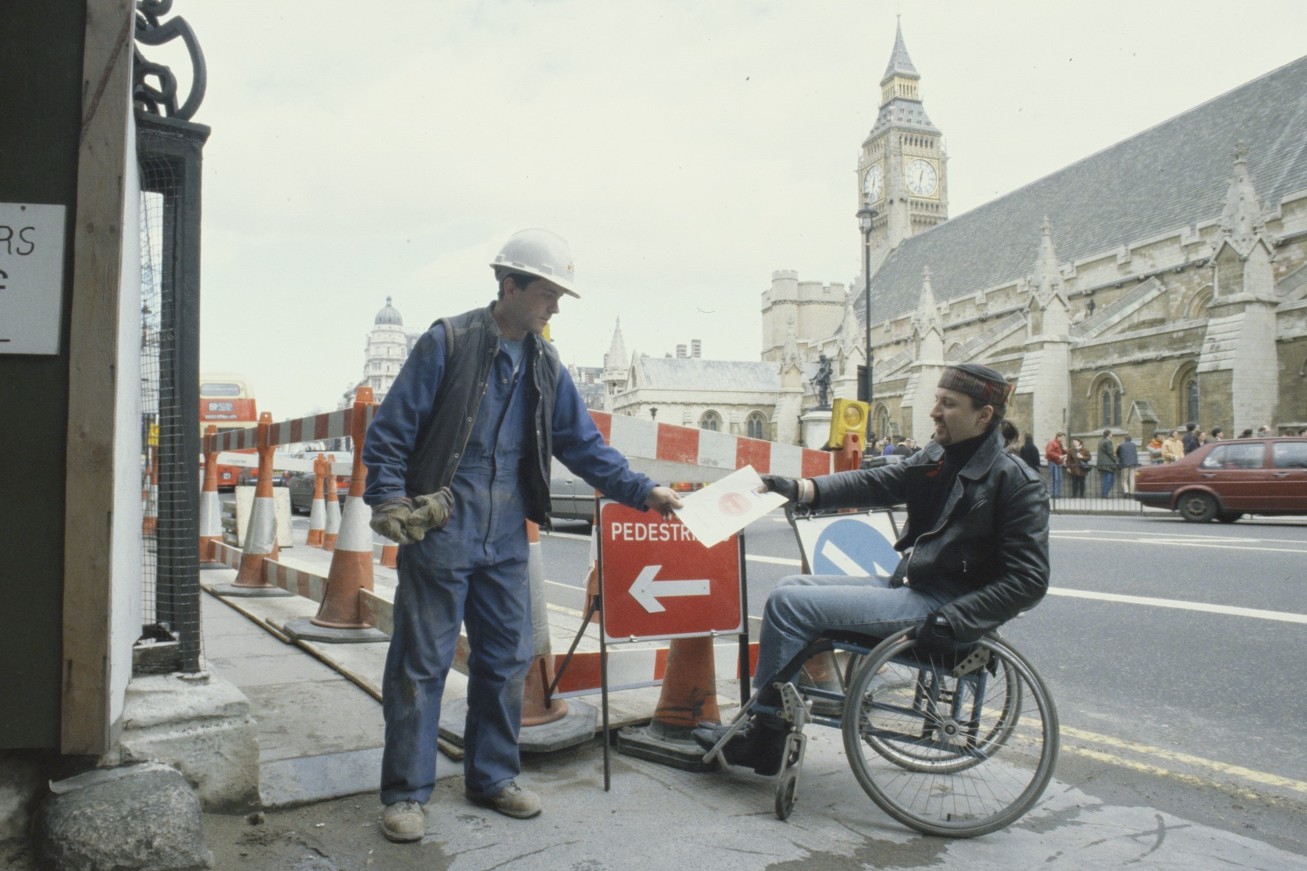
From the Agnes and Adam Fletcher archive deposited into NDAMC – Adam tries to lobby Parliament but barriers-steps stop him? But below, Adam uses his time to campaign for rights outside Parliament.
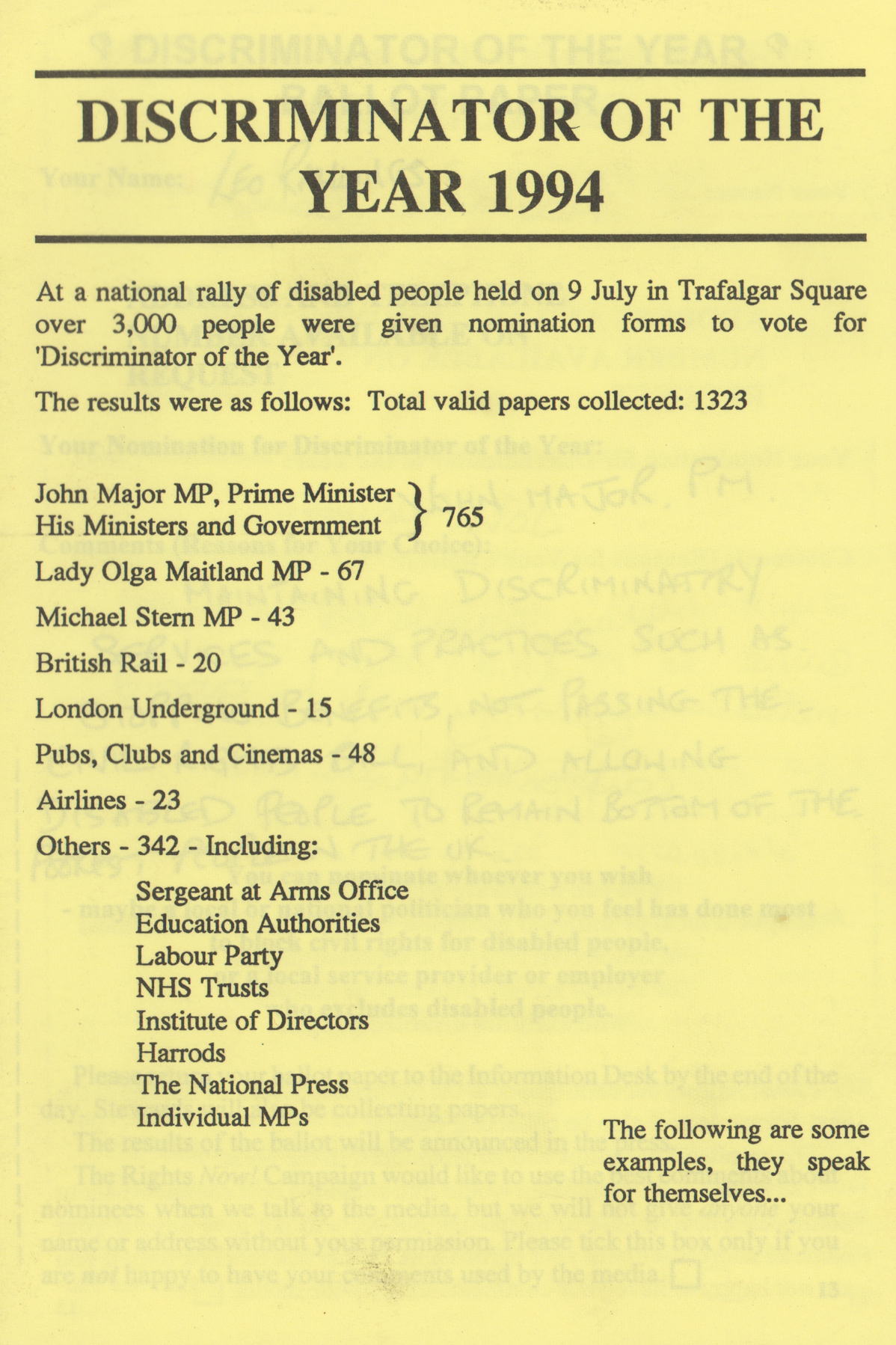
Also held in the Agnes and Adam Fletcher Collection, the wit & rage of the movement shown in this Discriminator Of The Year
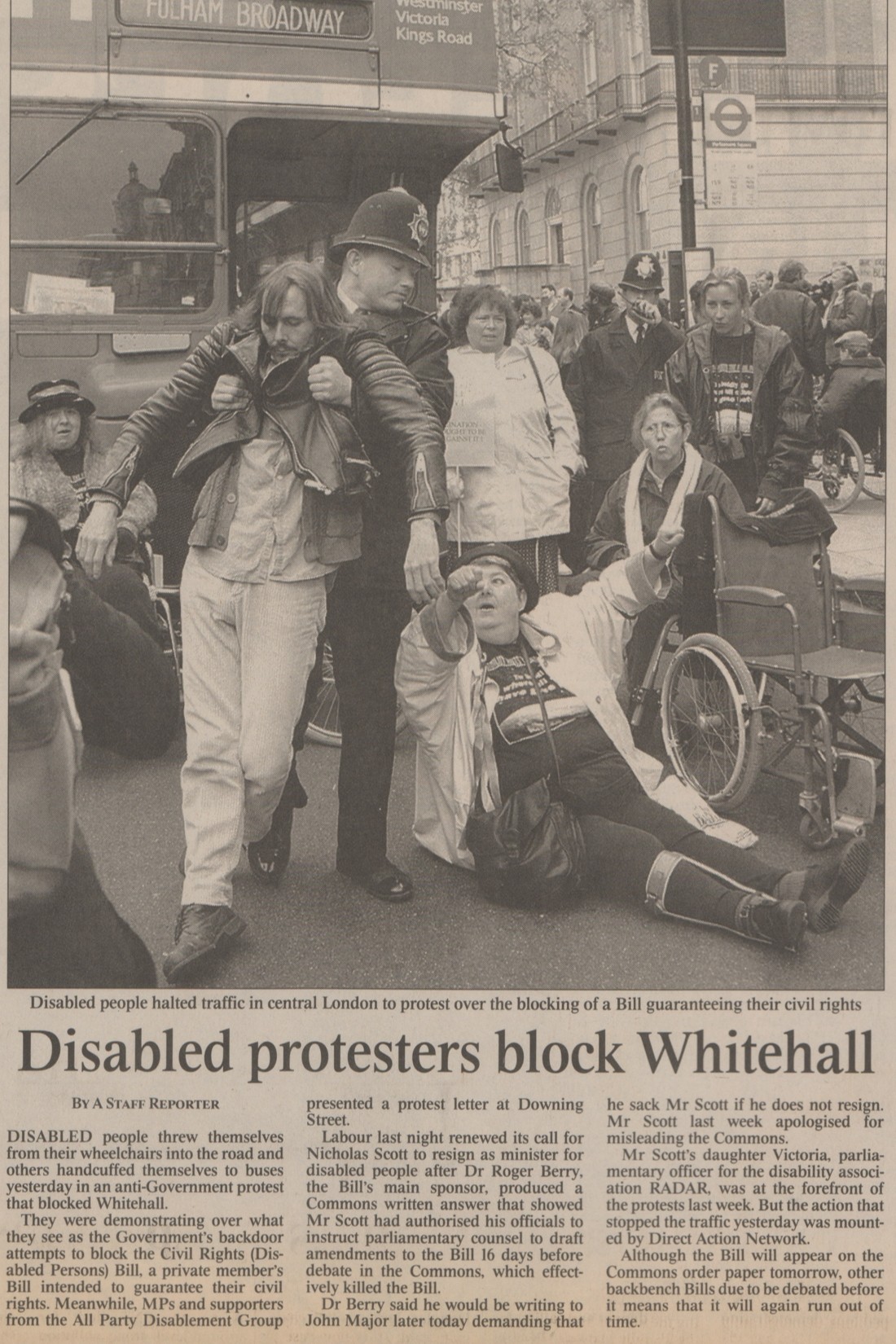
And the great John Kelly kept press clippings of the struggle, and much more too, now deposited into NDMAC.
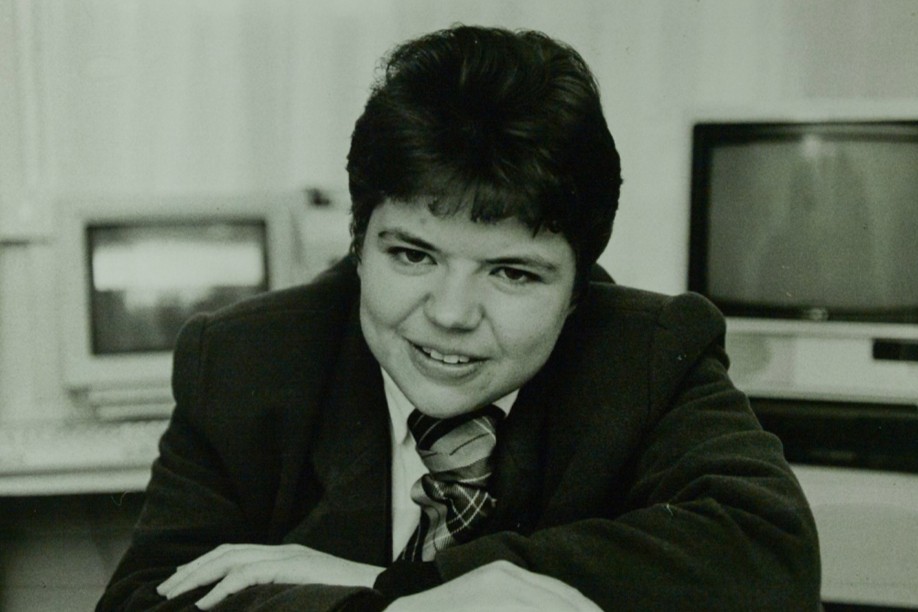
And below shows a powerful portrait of the legendary Simone Aspis, clearly ready to fight for rights and power, with Simone’s collection also now held in NDMAC.